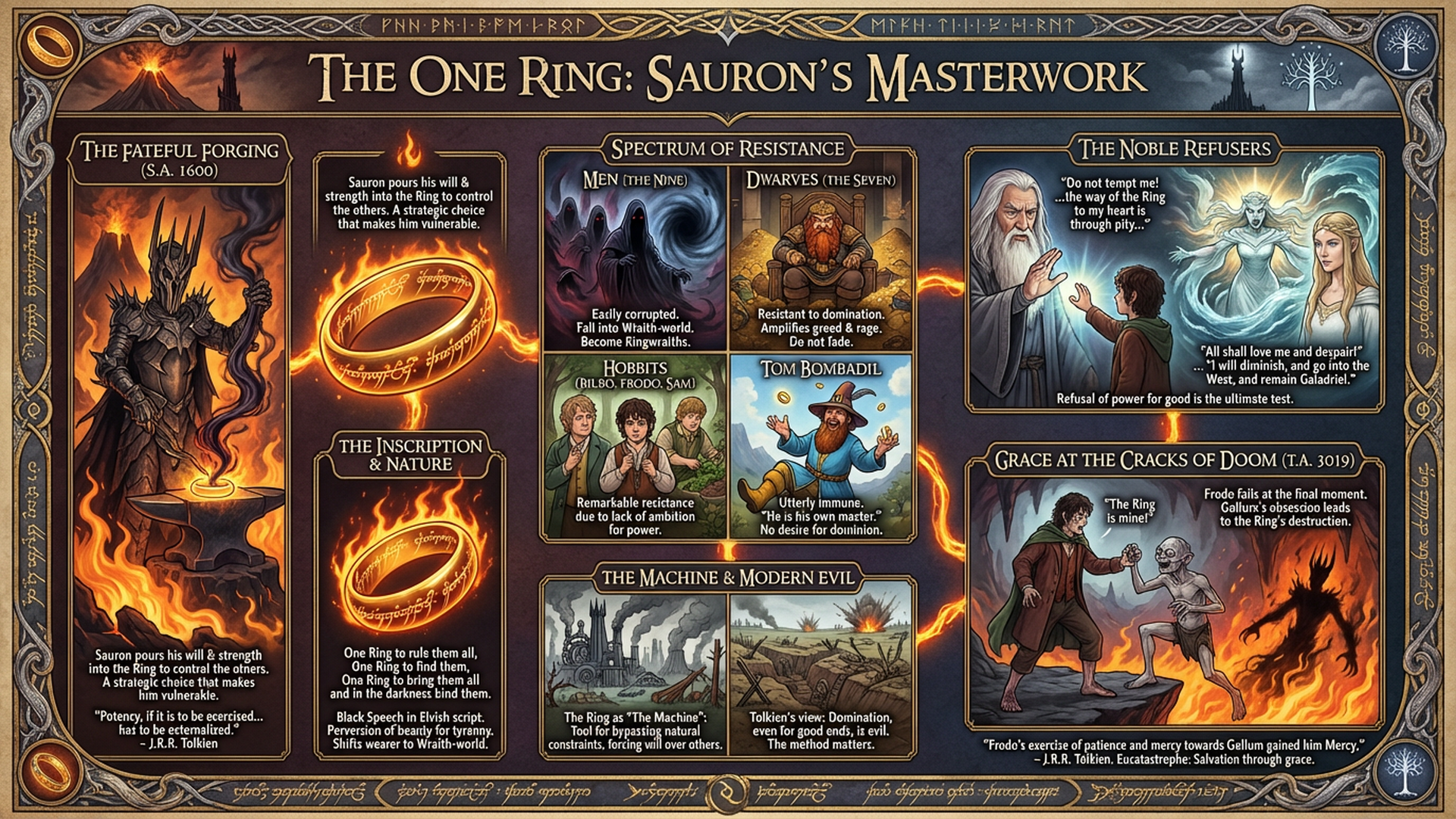
The One Ring: Why Sauron's Greatest Weapon Was His Downfall
The One Ring stands as Tolkien's most profound meditation on power and corruption. Forged by Sauron in the fires of Mount Doom around Second Age 1600, the Ring required Sauron to pour much of his own will and strength into the artifact, creating his ultimate vulnerability in pursuit of absolute control. The Ring operates by shifting wearers into the wraith-world, corrupting through personalized temptation, and displaying apparent sentience in its quest to return to its master. Different beings show remarkable variation in resistance: the Nine Kings of Men fell completely into Ringwraiths, Dwarves proved impossible to enslave due to Aule's design, Hobbits resisted through their lack of ambition, and Tom Bombadil remained utterly immune. The noble and powerful faced the greatest danger, as the Ring tempted through good intentions. Tolkien embedded the Ring with symbolic meaning as the Machine, representing the will-to-power and domination he witnessed in industrialized warfare. The eucatastrophic ending reveals grace operating through accumulated moral choices, as Frodo's mercy toward Gollum enabled the destruction his will could not achieve.