
Research & Sources
Why Didn't Sauron Guard Mount Doom? What He Actually Feared
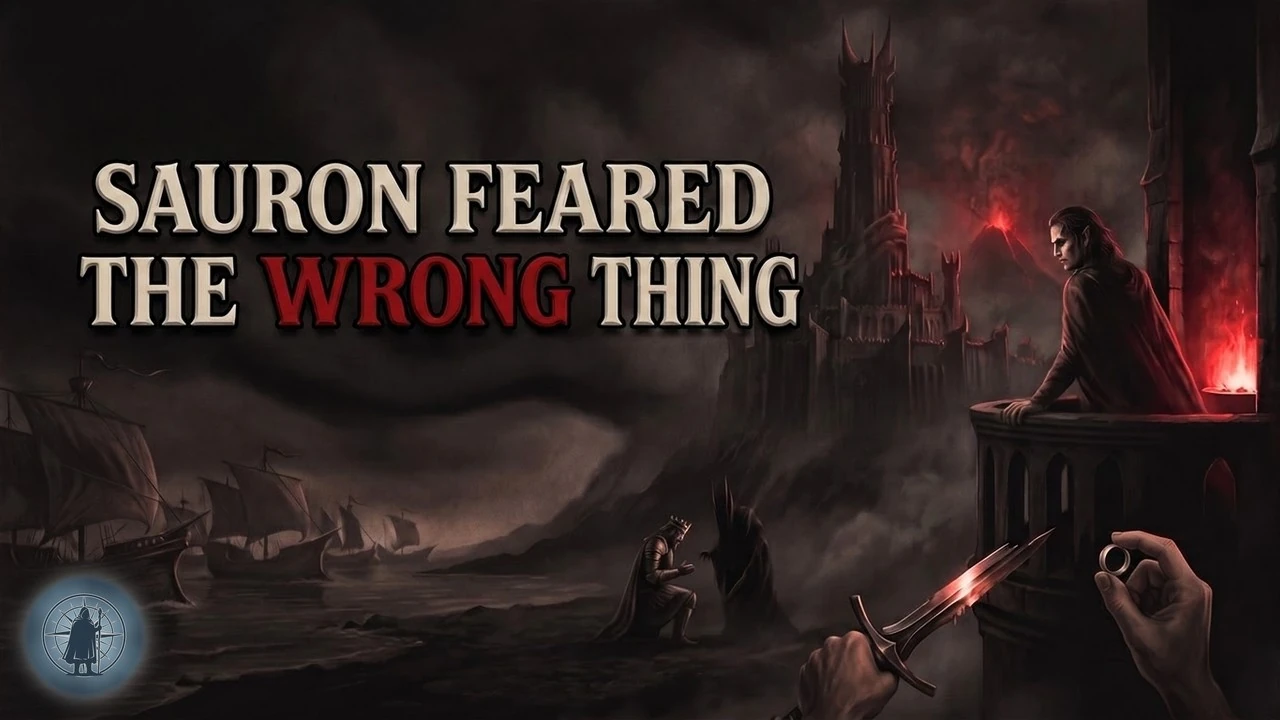 Watch the episode
Why Didn't Sauron Guard Mount Doom? What He Actually Feared | Tolkien Explained
Watch the episode
Why Didn't Sauron Guard Mount Doom? What He Actually Feared | Tolkien Explained
Research Notes: Who Sauron Truly Feared
Research verdict on sustainability: This topic comfortably sustains a 29–36 minute episode. The evidence base is unusually dense — Tolkien narrates Sauron's fear explicitly, in the narrator's voice or Gandalf's, in at least six separate chapters across LOTR, plus the Akallabêth, plus Unfinished Tales, plus Letters 131, 183, 211 and 246, plus the "Notes on motives in the Silmarillion" essay in Morgoth's Ring. Eight distinct analytical themes are below, each with more than three hard specifics. Nothing here required padding.
A note on how this was researched. Quotations marked [FULL TEXT] were read from continuous primary text (a searchable LOTR incl. Appendices; The Silmarillion incl. the Akallabêth and the Waldman letter printed as its preface in HarperCollins editions; Unfinished Tales; the Morgoth's Ring "Notes on motives" essay; the Ósanwe-kenta). Those are character-reliable. Quotations marked [SECONDARY] came through web transcriptions and should be treated as accurate in substance but worth one print check before going on air. Several widely-circulated versions of key quotes are wrong; the corrections are flagged inline and collected at the end.
Overview
The planning brief's thesis is correct, and the text supports it more strongly than expected — but it needs one narrowing to survive a fact-check.
The honest version is not "Sauron feared Aragorn." It is a two-part claim:
1. Sauron's fears were real, specific, and well-founded. He feared the might of the West — first Númenor, then the Valar, then briefly Eru himself. He feared a rival seizing the One Ring and using it to unseat him. He feared, by name, the Heir of Isildur. None of these is a critic's inference; all three are narrated in the text, and the third is narrated by Aragorn in the first person immediately after he causes it. 2. And every one of those fears pointed away from the actual threat. He could not conceive that anyone holding the Ring would destroy it. Tolkien says so in his own voice ("But that he never contemplated nor feared" — Letter 131) and puts the same analysis in Gandalf's mouth twice ("Into his heart the thought will not enter that any will refuse it" — Council of Elrond; "That we should try to destroy the Ring itself has not yet entered into his darkest dream" — The White Rider).
The gap between the two is the episode. Sauron spent the entire War of the Ring watching the front door — Aragorn, the Sword re-forged, the army at the Morannon — because those were the things his own psychology could model. The back door was two hobbits, and it was open the whole time.
The single most interesting discovery in this research is a reversal the brief did not anticipate: **the Downfall of Númenor did not teach Sauron to fear the Valar. It taught him the opposite.* Tolkien states this directly in Morgoth's Ring*: Sauron read Eru's drowning of a continent as evidence that the West had withdrawn from the world's affairs, and "he had ceased to fear God's action in Arda." The one time he was correctly, catastrophically afraid, he drew precisely the wrong conclusion from it. That is a better story than "he feared the Valar," and it is Tolkien's own reading, not a critic's.
Primary Sources
The Silmarillion — "Of the Rings of Power and the Third Age"
Fear as his very first recorded motive, at the start of the Second Age. After Morgoth's fall, Sauron does obeisance to Eönwë:
"And some hold that this was not at first falsely done, but that Sauron in truth repented, if
only out of fear, being dismayed by the fall of Morgoth and the great wrath of the Lords of
the West." [FULL TEXT]
Then, when commanded to return to Aman for judgement:
"Then Sauron was ashamed, and he was unwilling to return in humiliation and to receive from
the Valar a sentence, it might be, of long servitude in proof of his good faith; for under
Morgoth his power had been great. Therefore when Eönwë departed he hid himself in
Middle-earth; and he fell back into evil, for the bonds that Morgoth had laid upon him were
very strong." [FULL TEXT]
Note the structure: the first thing we learn about Sauron in the Second Age is that he acts from fear, and the second thing is that shame overrides the fear and he runs. Fear does not reform him. It reroutes him.
The title he gave himself:
"Now Sauron's lust and pride increased, until he knew no bounds, and he determined to make
himself master of all things in Middle-earth, and to destroy the Elves, and to compass, if he
might, the downfall of Númenor. He brooked no freedom nor any rivalry, and he named himself
Lord of the Earth." [FULL TEXT]
⚠️ Variant flag on the title. Three texts give three different self-bestowed titles: Of the Rings of Power has "Lord of the Earth"; the Akallabêth has "King of Men"; Letter 131 has "King of Kings and Lord of the World". Use whichever suits the line, but don't attribute one to the wrong book.
Where he did not dare go:
"But in Lindon Gil-galad still maintained his power, and Sauron dared not as yet to pass the
Mountains of Ered Luin nor to assail the Havens; and Gil-galad was aided by the Númenóreans."
[FULL TEXT]
Númenor as the thing his own army would not face:
"So great was the power and splendour of the Númenóreans in the noontide of their realm that
the servants of Sauron would not withstand them, and hoping to accomplish by cunning what he
could not achieve by force, he left Middle-earth for a while and went to Númenor as a hostage
of Tar-Calion the King." [FULL TEXT]
The miscalculation, in one sentence:
"But that ruin was more terrible than Sauron had foreseen, for he had forgotten the might of
the Lords of the West in their anger." [FULL TEXT]
The hunt for Isildur's line, stated by Gandalf to Elrond:
"It is Sauron himself who has taken shape again and now grows apace; and he is gathering again
all the Rings to his hand; and he seeks ever for news of the One, and of the Heirs of Isildur,
if they live still on earth." [FULL TEXT]
The Silmarillion — Akallabêth
The surrender at Umbar (SA 3261) — the central passage:
"And Sauron came. Even from his mighty tower of Barad-dûr he came, and made no offer of
battle. For he perceived that the power and majesty of the Kings of the Sea surpassed all
rumour of them, so that he could not trust even the greatest of his servants to withstand
them; and he saw not his time yet to work his will with the Dúnedain. And he was crafty, well
skilled to gain what he would by subtlety when force might not avail. Therefore he humbled
himself before Ar-Pharazôn and smoothed his tongue; and men wondered, for all that he said
seemed fair and wise." [FULL TEXT]
The hostage bargain, and what he actually felt:
"But Ar-Pharazôn was not yet deceived, and it came into his mind that, for the better keeping
of Sauron and of his oaths of fealty, he should be brought to Númenor, there to dwell as a
hostage for himself and all his servants in Middle-earth. To this Sauron assented as one
constrained, yet in his secret thought he received it gladly, for it chimed indeed with his
desire. And Sauron passed over the sea and looked upon the land of Númenor, and on the city of
Armenelos in the days of its glory, and he was astounded; but his heart within was filled the
more with envy and hate." [FULL TEXT]
Speed of the conversion — the hostage becomes the counsellor:
"Yet such was the cunning of his mind and mouth, and the strength of his hidden will, that ere
three years had passed he had become closest to the secret counsels of the King." [FULL TEXT]
Defying the lightning (SA c.3310s):
"But the Temple itself was unshaken, and Sauron stood there upon the pinnacle and defied the
lightning and was unharmed; and in that hour men called him a god and did all that he would."
[FULL TEXT]
Eru's intervention (SA 3319):
"Then Manwë upon the Mountain called upon Ilúvatar, and for that time the Valar laid down
their government of Arda. But Ilúvatar showed forth his power, and he changed the fashion of
the world; and a great chasm opened in the sea between Númenor and the Deathless Lands..."
[FULL TEXT]
And then — the passage the whole episode turns on:
"For Sauron himself was filled with great fear at the wrath of the Valar, and the doom that
Eru laid upon sea and land. It was greater far than aught he had looked for, hoping only for
the death of the Númenóreans and the defeat of their proud king." [FULL TEXT]
Note the precise limit of the claim. He expected the Númenóreans to die. He expected Ar-Pharazôn to be humiliated. What he did not expect was Eru bending the world.
The three laughs — and this is important, they come AFTER the fear sentence, not instead of it:
"And Sauron, sitting in his black seat in the midst of the Temple, had laughed when he heard
the trumpets of Ar-Pharazôn sounding for battle; and again he had laughed when he heard the
thunder of the storm; and a third time, even as he laughed at his own thought, thinking what
he would do now in the world, being rid of the Edain for ever, he was taken in the midst of
his mirth, and his seat and his temple fell into the abyss." [FULL TEXT]
⚠️ This is the most misused passage in the whole topic. The triple laugh is constantly quoted online as proof of Sauron's fearlessness. Tolkien puts "filled with great fear" in the sentence immediately before it. Anyone using the laughter as counterweight has cut the preceding line.
What the Downfall cost him permanently:
"But Sauron was not of mortal flesh, and though he was robbed now of that shape in which he
had wrought so great an evil, so that he could never again appear fair to the eyes of Men, yet
his spirit arose out of the deep and passed as a shadow and a black wind over the sea, and
came back to Middle-earth and to Mordor that was his home. There he took up again his great
Ring in Barad-dûr, and dwelt there, dark and silent, until he wrought himself a new guise, an
image of malice and hatred made visible; and the Eye of Sauron the Terrible few could endure."
[FULL TEXT]
⚠️ Common web version reads "so that never again could he appear fair." Wrong. The text is "so that he could never again appear fair to the eyes of Men."
The Silmarillion — "Of Beren and Lúthien" (genuine counterweight)
"Then Sauron laughed; and he mocked Gorlim, and revealed to him that he had seen only a
phantom devised by wizardry to entrap him; for Eilinel was dead. 'Nonetheless I will grant thy
prayer,' said Sauron; 'and thou shalt go to Eilinel, and be set free of my service.' Then he
put him cruelly to death." [FULL TEXT]
Pure sadistic contempt, no fear anywhere. This is the First Age Sauron, and it is the strongest honest counterweight in the corpus.
The Lord of the Rings — Appendix A, I (i) "Númenor"
"He resolved to challenge Sauron the Great for the supremacy in Middle-earth, and at length he
himself set sail with a great navy, and he landed at Umbar. So great was the might and
splendour of the Númenóreans that Sauron's own servants deserted him; and Sauron humbled
himself, doing homage, and craving pardon. Then Ar-Pharazôn in the folly of his pride carried
him back as a prisoner to Númenor." [FULL TEXT]
"But it was not so. Sauron was indeed caught in the wreck of Númenor, so that the bodily form
in which he long had walked perished; but he fled back to Middle-earth, a spirit of hatred
borne upon a dark wind. He was unable ever again to assume a form that seemed fair to men, but
became black and hideous, and his power thereafter was through terror alone. He re-entered
Mordor, and hid there for a time in silence. But his anger was great when he learned that
Elendil, whom he most hated, had escaped him, and was now ordering a realm upon his borders."
[FULL TEXT]
"Therefore, after a time he made war upon the Exiles, before they should take root... But
Sauron struck too soon, before his own power was rebuilt, whereas the power of Gil-galad had
increased in his absence; and in the Last Alliance that was made against him Sauron was
overthrown and the One Ring was taken from him. So ended the Second Age." [FULL TEXT]
"Sauron struck too soon" is a pattern, not an incident. He does it again in TA 3018 (see the Hunt for the Ring below) and Gandalf names it as our hope: "for imagining war he has let loose war."
The Lord of the Rings — Appendix A, I (v) "The Tale of Aragorn and Arwen"
"But he was called Estel, that is 'Hope', and his true name and lineage were kept secret at
the bidding of Elrond; for the Wise then knew that the Enemy was seeking to discover the Heir
of Isildur, if any remained upon earth." [FULL TEXT]
Aragorn's entire childhood is a counter-intelligence measure against one Maia's search. That is how specific and how long-running the fear was.
The Lord of the Rings — FOTR I.2, "The Shadow of the Past"
"He believed that the One had perished; that the Elves had destroyed it, as should have been
done. But he knows now that it has not perished, that it has been found. So he is seeking it,
seeking it, and all his thought is bent on it. It is his great hope and our great fear."
[FULL TEXT]
"He knows where Isildur fell. He knows where Gollum found his ring. He knows that it is a
Great Ring, for it gave long life... He knows that it is the One. And he has at last heard, I
think, of hobbits and the Shire." [FULL TEXT]
⚠️ Correction to a common claim. People cite "The Shadow of the Past" for Sauron being ignorant of hobbits. It says the reverse — he has heard of them. The "one thing" the Enemy lacks in this chapter is the Ring, not knowledge of hobbits. The ignorance passage is in The White Rider.
The Lord of the Rings — FOTR II.2, "The Council of Elrond"
Boromir names Sauron's fear out loud, and is right:
"Why should we not think that the Great Ring has come into our hands to serve us in the very
hour of need? Wielding it the Free Lords of the Free may surely defeat the Enemy. That is what
he most fears, I deem." [FULL TEXT]
Elrond's answer — the rival Dark Lord problem:
"If any of the Wise should with this Ring overthrow the Lord of Mordor, using his own arts, he
would then set himself on Sauron's throne, and yet another Dark Lord would appear... For
nothing is evil in the beginning. Even Sauron was not so. I fear to take the Ring to hide it.
I will not take the Ring to wield it." [FULL TEXT]
Gandalf's statement of the blind spot — the single most important quotation in the episode:
"'Despair, or folly?' said Gandalf. 'It is not despair, for despair is only for those who see
the end beyond all doubt. We do not. It is wisdom to recognize necessity, when all other
courses have been weighed, though as folly it may appear to those who cling to false hope.
Well, let folly be our cloak, a veil before the eyes of the Enemy! For he is very wise, and
weighs all things to a nicety in the scales of his malice. But the only measure that he knows
is desire, desire for power; and so he judges all hearts. Into his heart the thought will not
enter that any will refuse it, that having the Ring we may seek to destroy it. If we seek
this, we shall put him out of reckoning.'" [FULL TEXT]
Elrond immediately caps it:
"'At least for a while,' said Elrond. 'The road must be trod, but it will be very hard. And
neither strength nor wisdom will carry us far upon it. This quest may be attempted by the weak
with as much hope as the strong. Yet such is oft the course of deeds that move the wheels of
the world: small hands do them because they must, while the eyes of the great are elsewhere.'"
[FULL TEXT]
The Lord of the Rings — FOTR II.7, "The Mirror of Galadriel"
"I say to you, Frodo, that even as I speak to you, I perceive the Dark Lord and know his mind,
or all of his mind that concerns the Elves. And he gropes ever to see me and my thought. But
still the door is closed!" [FULL TEXT]
"He suspects, but he does not know — not yet." [FULL TEXT]
Galadriel reads him; he cannot read her. The asymmetry is not power — it is that she is willing to be read and he is not. (Compare the Ósanwe-kenta below: "fear closed the door faster.")
The Lord of the Rings — TT III.5, "The White Rider" — the load-bearing passage
"He supposes that we were all going to Minas Tirith; for that is what he would himself have
done in our place. And according to his wisdom it would have been a heavy stroke against his
power. **Indeed he is in great fear, not knowing what mighty one may suddenly appear, wielding
the Ring, and assailing him with war, seeking to cast him down and take his place. That we
should wish to cast him down and have no one in his place is not a thought that occurs to his
mind. That we should try to destroy the Ring itself has not yet entered into his darkest
dream.** In which no doubt you will see our good fortune and our hope. For imagining war he has
let loose war, believing that he has no time to waste; for he that strikes the first blow, if
he strikes it hard enough, may need to strike no more... Wise fool. For if he had used all
his power to guard Mordor, so that none could enter, and bent all his guile to the hunting of
the Ring, then indeed hope would have faded: neither Ring nor Bearer could long have eluded
him. But now his eye gazes abroad rather than near at home; and mostly he looks towards Minas
Tirith." [FULL TEXT]
This one passage contains the fear, the blind spot, and the consequence, in that order. If the episode has a thesis sentence, Tolkien already wrote it.
The Lord of the Rings — TT III.11, "The Palantír"
Gandalf, five days before Aragorn does it deliberately:
"It may be that he will learn that I was there and stood upon the stairs of Orthanc — with
hobbits at my tail. Or that an heir of Elendil lives and stood beside me. If Wormtongue was
not deceived by the armour of Rohan, he would remember Aragorn and the title that he claimed.
That is what I fear." [FULL TEXT]
The Lord of the Rings — TT IV.3, "The Black Gate is Closed"
Gollum, on the geography of Sauron's attention:
"He does not expect attack that way. His Eye is all round, but it attends more to some places
than to others. He can't see everything all at once, not yet... It's here in the North that
the big danger is for Him, and for us... But away down west He is not afraid, and there are
the Silent Watchers." [FULL TEXT]
Sauron's fear is directional. It has a compass bearing, and the bearing is wrong.
The Lord of the Rings — ROTK V.2, "The Passing of the Grey Company"
Aragorn, the morning after the palantír (derived date: 6 March TA 3019):
"'A struggle somewhat grimmer for my part than the battle of the Hornburg,' answered Aragorn.
'I have looked in the Stone of Orthanc, my friends.'
'You have looked in that accursed stone of wizardry!' exclaimed Gimli with fear and
astonishment in his face. 'Did you say aught to — him? Even Gandalf feared that encounter.'
'You forget to whom you speak,' said Aragorn sternly, and his eyes glinted. 'What do you fear
that I should say to him? Did I not openly proclaim my title before the doors of Edoras?...
**I am the lawful master of the Stone, and I had both the right and the strength to use it, or
so I judged. The right cannot be doubted. The strength was enough — barely.**'
He drew a deep breath. '**It was a bitter struggle, and the weariness is slow to pass. I spoke
no word to him, and in the end I wrenched the Stone to my own will. That alone he will find
hard to endure. And he beheld me.** Yes, Master Gimli, he saw me, but in other guise than you
see me here... **To know that I lived and walked the earth was a blow to his heart, I deem;
for he knew it not till now. The eyes in Orthanc did not see through the armour of Théoden;
but Sauron has not forgotten Isildur and the sword of Elendil. Now in the very hour of his
great designs the heir of Isildur and the Sword are revealed; for I showed the blade re-forged
to him. He is not so mighty yet that he is above fear; nay, doubt ever gnaws him.**'"
[FULL TEXT]
⚠️ Two corrections. (a) The line is "He is not so mighty yet that he is above fear" — the "yet" is load-bearing and is dropped in most web versions. (b) Several sites reverse the two questions and read "I and the lawful master of the Stone." The book reads "I am."
And immediately after: "'The hasty stroke goes oft astray,' said Aragorn. 'We must press our Enemy, and no longer wait upon him for the move.'" [FULL TEXT]
The Lord of the Rings — ROTK V.9, "The Last Debate"
"Now Sauron knows all this, and he knows that this precious thing which he lost has been found
again; but he does not yet know where it is, or so we hope. **And therefore he is now in great
doubt.** For if we have found this thing, there are some among us with strength enough to wield
it. That too he knows. For do I not guess rightly, Aragorn, that you have shown yourself to
him in the Stone of Orthanc?" [FULL TEXT]
Aragorn's rationale and the cost:
"I did so ere I rode from the Hornburg. **I deemed that the time was ripe, and that the Stone
had come to me for just such a purpose. It was then ten days since the Ring-bearer went east
from Rauros, and the Eye of Sauron, I thought, should be drawn out from his own land. Too
seldom has he been challenged since he returned to his Tower. Though if I had foreseen how
swift would be his onset in answer, maybe I should not have dared to show myself. Bare time
was given me to come to your aid." [FULL TEXT]**
Gandalf on why Sauron won't simply wait:
"He is not yet sure, and he has not built up his power by waiting until his enemies are
secure, as we have done. Also we could not learn how to wield the full power all in a day.
Indeed it can be used only by one master alone, not by many; and he will look for a time of
strife, ere one of the great among us makes himself master and puts down the others."
[FULL TEXT]
The three signs eating at Sauron:
"He studies the signs: **the Sword that robbed him of his treasure re-made; the winds of
fortune turning in our favour, and the defeat unlooked-for of his first assault; the fall of
his great Captain.** His doubt will be growing, even as we speak here. His Eye is now straining
towards us, blind almost to all else that is moving. So we must keep it. Therein lies all our
hope." [FULL TEXT]
Gandalf ventriloquising Sauron — the plan is literally to feed the fear:
"He will take that bait, in hope and in greed, **for he will think that in such rashness he
sees the pride of the new Ringlord: and he will say: 'So! he pushes out his neck too soon
and too far. Let him come on, and behold I will have him in a trap from which he cannot escape.
There I will crush him, and what he has taken in his insolence shall be mine again for ever.**'"
[FULL TEXT]
Also the stakes, in Gandalf's mouth:
"If it is destroyed, then he will fall; and his fall will be so low that none can foresee his
arising ever again. For he will lose the best part of the strength that was native to him in
his beginning, and all that was made or begun with that power will crumble, and he will be
maimed for ever, becoming a mere spirit of malice that gnaws itself in the shadows, but cannot
again grow or take shape." [FULL TEXT]
The Lord of the Rings — ROTK V.10, "The Black Gate Opens" (counterweight)
"But Sauron had already laid his plans, and he had a mind first to play these mice cruelly
before he struck to kill." [FULL TEXT]
The Mouth of Sauron:
"'Is there anyone in this rout with authority to treat with me?' he asked. 'Or indeed with wit
to understand me? Not thou at least!' he mocked, turning to Aragorn with scorn. 'It needs more
to make a king than a piece of Elvish glass, or a rabble such as this. Why, any brigand of the
hills can show as good a following!'
Aragorn said naught in answer, but **he took the other's eye and held it, and for a moment they
strove thus; but soon, though Aragorn did not stir nor move hand to weapon, the other quailed
and gave back as if menaced with a blow." [FULL TEXT]**
"'Surety you crave! Sauron gives none.'" [FULL TEXT]
And Gandalf naming Sauron's behaviour as fear-behaviour:
"Or has the field of Gondor destroyed his hope in war, so that he falls to haggling?"
[FULL TEXT]
Note the shape of the scene: Sauron's contempt is delivered by proxy, the proxy loses a staring contest to the Heir of Isildur, and then "**he looked at the fell faces of the Captains and their deadly eyes, and fear overcame his wrath.**" Tolkien builds the counterweight and demolishes it inside one scene.
The Lord of the Rings — ROTK VI.1, "The Tower of Cirith Ungol" (the thing Sauron cannot model)
Sam, tempted:
"In that hour of trial it was the love of his master that helped most to hold him firm; but
also deep down in him lived still unconquered his plain hobbit-sense: he knew in the core of
his heart that he was not large enough to bear such a burden... **The one small garden of a
free gardener was all his need and due, not a garden swollen to a realm; his own hands to use,
not the hands of others to command." [FULL TEXT]**
This is the exact refusal Gandalf said "will not enter" Sauron's heart, dramatised in a gardener, inside Mordor, within sight of the Tower.
The Lord of the Rings — ROTK VI.3, "Mount Doom" — the last thing Tolkien says about Sauron's interior
"And far away, as Frodo put on the Ring and claimed it for his own, even in Sammath Naur the
very heart of his realm, the Power in Barad-dûr was shaken, and the Tower trembled from its
foundations to its proud and bitter crown. The Dark Lord was suddenly aware of him, and his
Eye piercing all shadows looked across the plain to the door that he had made; and **the
magnitude of his own folly was revealed to him in a blinding flash**, and all the devices of
his enemies were at last laid bare. **Then his wrath blazed in consuming flame, but his fear
rose like a vast black smoke to choke him. For he knew his deadly peril and the thread upon
which his doom now hung.** From all his policies and webs of fear and treachery, from all his
stratagems and wars his mind shook free; and throughout his realm a tremor ran, his slaves
quailed, and his armies halted, and his captains suddenly steerless, bereft of will, wavered
and despaired. For they were forgotten." [FULL TEXT]
⚠️ "His wrath blazed" is often quoted alone as evidence of rage-not-fear. The sentence is a matched pair, and the fear gets the bigger image. The last interior state Tolkien ever assigns Sauron is fear.
The Lord of the Rings — ROTK VI.4, "The Field of Cormallen"
"Enormous it reared above the world, and stretched out towards them a vast threatening hand,
terrible but impotent: for even as it leaned over them, a great wind took it, and it was
all blown away, and passed; and then a hush fell." [FULL TEXT]
Unfinished Tales — "The Hunt for the Ring"
"He did not trust Gollum, for **he divined something indomitable in him, which could not be
overcome, even by the Shadow of Fear, except by destroying him.** But Sauron perceived the
depth of Gollum's malice towards those that had 'robbed' him, and guessing that he would go in
search of them to avenge himself, Sauron hoped that his spies would thus be led to the Ring."
[FULL TEXT]
"**Ultimately indomitable he was, except by death, as Sauron did not fully comprehend, being
himself consumed by lust for the Ring." [FULL TEXT]**
A named cognitive failure, caused by his own appetite. This is the mechanism of the blind spot stated as a general law, not just applied to the Ring's destruction.
"**Now Sauron learning of the capture of Gollum by the chiefs of his enemies was in great
haste and fear.** Yet all his ordinary spies and emissaries could bring him no tidings."
[FULL TEXT]
"At length they returned; but the summer was now far waned, and **the wrath and fear of Sauron
was mounting**. When they came back to the Wold September had come; and there they met
messengers from Barad-dûr conveying threats from their Master **that filled even the
Morgul-lord with dismay... Speed alone would now serve, and secrecy must be abandoned.**"
[FULL TEXT]
"**Sauron must then have been filled with anger and alarm. He resolved to use the Ringwraiths
as soon as he could, for speed rather than secrecy was now important." [FULL TEXT]**
(Christopher Tolkien's reconstruction — note the hedge "must then have been.")
And the counter-evidence in the same essay — his fear going down:
"**Sauron's fears were much allayed when he perceived from Gollum's account that Baggins must
have been a creature of the same sort." [FULL TEXT]**
"Sauron plainly had no inkling that Baggins came from a region far removed from the Misty
Mountains... **This was a very small and natural error — but possibly the most important
mistake that Sauron made in the whole affair. But for it, the Black Riders would have reached
the Shire weeks sooner." [FULL TEXT]**
And his estimate of Gondor being wrong, twice:
"Thus Sauron tested the strength and preparedness of Denethor, and found them more than he had
hoped." / "Without belittling the valour of Gondor, **which indeed Sauron found greater far
than he had hoped..." [FULL TEXT]**
Unfinished Tales — "The Palantíri"
"Any 'heir of Elendil' (that is, a recognized descendant occupying a throne or lordship in the
Númenórean realms by virtue of this descent) had the right to use any of the palantíri.
Aragorn thus claimed the right to take the Orthanc-stone into his possession, since it was
now, for the time being, without owner or warden; and also because he was de jure the
rightful King of both Gondor and Arnor." [FULL TEXT]
"The Stones were far more amenable to legitimate users: most of all to true 'Heirs of Elendil'
(as Aragorn), but also to one with inherited authority (as Denethor), as compared to Saruman,
or Sauron." [FULL TEXT]
This is the mechanism that makes Aragorn's win structural rather than a fluke of willpower — and it means the thing Sauron lost the contest to was legitimacy, the one currency he never had.
"**It was only Sauron who used a Stone for the transference of his superior will, dominating
the weaker surveyor and forcing him to reveal hidden thought and to submit to commands.**"
[FULL TEXT] (Author's note.)
"The palantíri could not themselves survey men's minds, at unawares or unwilling; for the
transference of thought depended on the wills of the user on either side." [FULL TEXT]
Unfinished Tales — "The Disaster of the Gladden Fields"
Isildur, dying:
"'The vengeance of Sauron lives on, though he may be dead', he said to Elendur."
[FULL TEXT]
"Though it was unknown to them the Ring, cut from his black hand two years before, was still
laden with Sauron's evil will and called to all his servants for their aid." [FULL TEXT]
"**No tortures would have satisfied his anger with the bungling fools who had let slip the
greatest prize in Middle-earth**... Nonetheless it proved in the event that the War of the Ring
was lost at the Disaster of the Gladden Fields." [FULL TEXT]
On Elessar: "Elessar was according to the records of the Dúnedain the descendant in the thirty
eighth degree of Elendur's brother Valandil. So long was it before he was avenged."
[FULL TEXT]
Unfinished Tales — "The Istari"
"**But Olórin declared that he was too weak for such a task, and that he feared Sauron. Then
Manwë said that that was all the more reason why he should go." [FULL TEXT]**
The documented, textual fear runs Gandalf → Sauron, not the reverse. Keeping this in the episode is what stops it becoming a strawman.
"They belonged solely to the Third Age and then departed, and **none save maybe Elrond, Círdan
and Galadriel discovered of what kind they were or whence they came." [FULL TEXT]**
⚠️ The essay never says Sauron didn't know what the Wizards were. His absence from that list is an inference. Frame it as one. (It also notes the Blue Wizards may have been "ensnared by Sauron," which cuts the other way.)
Unfinished Tales — "The Hunt for the Ring," §(iii)
"Saruman did not revere him, but **he grew to fear him, being ever uncertain how much Gandalf
perceived of his inner mind, troubled more by his silences than by his words." [FULL TEXT]**
The Letters of J.R.R. Tolkien
Letter 131 (to Milton Waldman, ~1951) — read from the full text as printed in the HarperCollins Silmarillion preface. [FULL TEXT]
The rival-claimant fear, stated as a structural fact:
"Unless some other seized it and became possessed of it. If that happened, the new possessor
could (if sufficiently strong and heroic by nature) challenge Sauron, become master of all
that he had learned or done since the making of the One Ring, and so overthrow him and usurp
his place. This was the essential weakness he had introduced into his situation."
The blind spot, in Tolkien's own voice — the single best citation in the episode:
"There was another weakness: if the One Ring was actually unmade, annihilated, then its power
would be dissolved, Sauron's own being would be diminished to vanishing point, and he would be
reduced to a shadow, a mere memory of malicious will. **But that he never contemplated nor
feared.** The Ring was unbreakable by any smithcraft less than his own. It was indissoluble in
any fire, save the undying subterranean fire where it was made — and that was unapproachable,
in Mordor. Also so great was the Ring's power of lust, that anyone who used it became mastered
by it; it was beyond the strength of any will (even his own) to injure it, cast it away, or
neglect it. So he thought. It was in any case on his finger."
"So he thought" is Tolkien's own three-word demolition. It is Letter 131 — confirmed verbatim, not (as several sites have it) an unnumbered fragment.
On the Númenor episode:
"When he learned that Sauron had taken the title of King of Kings and Lord of the World, he
resolved to put down the 'pretender'. He goes in strength and majesty to Middle-earth, and so
vast is his armament, and so terrible are the Númenóreans in the day of their glory that
**Sauron's servants will not face them. Sauron humbles himself, does homage to Tar-Calion, and
is carried off to Númenor as hostage and prisoner.**"
And on Sauron's own theology, which he preached to the Númenóreans:
"He denies the existence of God, saying that the One is a mere invention of the jealous Valar
of the West, the oracle of their own wishes. **The chief of the gods is he that dwells in the
Void, who will conquer in the end**, and in the void make endless realms for his servants."
⚠️ Letter 131 calls Ar-Pharazôn "**the thirteenth king of the line of Elros, Tar-Calion the Golden**." The published chronology makes him the twenty-fifth ruler / twenty-fourth king. This is an early-draft numbering. Don't use "thirteenth" on air.
Letter 183 ("Notes on W.H. Auden's review", c.1956) [SECONDARY]
"In my story Sauron represents as near an approach to the wholly evil will as is possible."
"**Sauron desired to be a God-King, and was held to be this by his servants; if he had been
victorious he would have demanded divine honour from all rational creatures and absolute
temporal power over the whole world.**"
The "triple treachery," point 2 — the strongest single Letters statement of Sauron acting from fear:
"When Morgoth was defeated by the Valar finally he forsook his allegiance; **but out of fear
only**; he did not present himself to the Valar or sue for pardon, and remained in Middle
Earth."
*Confidence: single-source secondary transcription. Attribution 183 (one source says 184). Worth a print check.*
Letter 211 (to Rhona Beare, 14 October 1958) [SECONDARY]
"**Ar-Pharazôn, as is told in the 'Downfall' or Akallabêth, conquered a terrified Sauron's
subjects, not Sauron. Sauron's personal 'surrender' was voluntary and cunning: he got free
transport to Numenor!**"
"**Then, Sauron was defeated by a 'miracle': a direct action of God the Creator, changing the
fashion of the world, when appealed to by Manwë.** Though reduced to 'a spirit of hatred borne
on a dark wind', I do not think one need boggle at this spirit carrying off the One Ring."
"Sauron was, of course, 'confounded' by the disaster, and diminished (having expended
enormous energy in the corruption of Númenor)."
⚠️ The "miracle" quotation is very widely misattributed to Letter 131. It is 211.
Letter 246 (draft to Mrs Eileen Elgar, September 1963) [SECONDARY] — the counterweight from Tolkien's own hand:
"Sauron would not have feared the Ring! It was his own and under his will."
"In his actual presence none but very few of equal stature could have hoped to withhold it
from him. Of 'mortals' no one, not even Aragorn. Of the others only Gandalf might be
expected to master him — being an emissary of the Powers and a creature of the same order."
"In the contest with the Palantír Aragorn was the rightful owner."
"Sauron sent at once the Ringwraiths. They were naturally fully instructed, and in no way
deceived as to the real lordship of the Ring."
"Sauron should be thought of as very terrible."
This is the honest brake on the whole episode: Tolkien is explicit that Aragorn would have lost a Ring-contest outright, and won the palantír contest on right, not on power.
The History of Middle-earth X — Morgoth's Ring, "Notes on motives in the Silmarillion"
[FULL TEXT] (essay read in full)
The wrong lesson — the most important find in this research:
"Sauron could not, of course, be a sincere atheist. Though one of the minor spirits created
before the world, he knew Eru, according to his measure. **He probably deluded himself with
the notion that the Valar (including Melkor) having failed, Eru had simply abandoned Eä, or at
any rate Arda, and would not concern himself with it any more.**"
"**It would appear that he interpreted the change of the world at the Downfall of Númenor,
when Aman was removed from the physical world, in this sense: Valar (and Elves) were removed
from effective control, and Men under God's curse and wrath.**"
"Sauron was not a 'sincere' atheist, but he preached atheism, because it weakened resistance
to himself (and he had ceased to fear God's action in Arda). As was seen in the case of
Ar-Pharazôn."
Why Saruman was legible to him and Gandalf was not:
"Sauron had, in fact, been very like Saruman, and so still understood him quickly and could
guess what he would be likely to think and do, even without the aid of the palantíri or of
spies; whereas Gandalf eluded and puzzled him."
"**His cynicism, which (sincerely) regarded the motives of Manwë as precisely the same as his
own, seemed fully justified in Saruman. Gandalf he did not understand.**"
What he actually wanted (relevant to why destruction was unthinkable):
"Sauron had never reached this stage of nihilistic madness. He did not object to the existence
of the world, so long as he could do what he liked with it. He still had the relics of positive
purposes, that descended from the good of the nature in which he began: **it had been his
virtue (and therefore also the cause of his fall, and of his relapse) that he loved order and
co-ordination, and disliked all confusion and wasteful friction.**"
"Sauron (unlike Morgoth) would have been content for the Númenóreans to exist, *as his own
subjects*."
Ósanwe-kenta (Vinyar Tengwar 39) — what "fear" means for an Ainu
[FULL TEXT] — but note: these passages are about Melkor, not Sauron. They establish that Tolkien thought about fear as a real interior state in an Ainu, and they describe the mechanism Sauron inherited.
"**He found that the open approach of a sáma to power and great force of will was felt by a
lesser sáma as an immense pressure, accompanied by fear. To dominate by weight of power and
fear was his delight; but in this case he found them unavailing: fear closed the door faster.
Therefore he tried deceit and stealth.**"
"In this vast network he himself enmeshed struggles and rages, **gnawed by suspicion, doubt
and fear.** Not so would it have been, if he could have broken the barrier, and seen the heart
as it is in its truth unveiled."
"The únati remained, a perpetual reminder of the existence of Eru and his invincibility, a
reminder also of the co-existence with himself and other beings (equal in descent if not in
power) impregnable by force. From this proceeds his unceasing and unappeasable rage."
⚠️ Do not use the widely-circulated line "Melkor alone of the Valar knew fear" — that sentence does not exist. The word "afraid" does not appear in the Ósanwe-kenta at all. The sentence people are half-remembering is "Melkor alone of the Great became at last bound to a bodily form," which is about embodiment, not fear.
Key Facts & Timeline
Second Age
- SA c.500 — "Sauron begins to stir again in Middle-earth." (Appendix B) - SA 600 — "The first ships of the Númenóreans appear off the coasts." (Appendix B) - SA c.1000 — "**Sauron, alarmed by the growing power of the Númenóreans, chooses Mordor as a land to make into a stronghold. He begins the building of Barad-dûr.**" (Appendix B) — the Dark Tower is a defensive response to a fear, 2,400 years before he meets a Númenórean army. - SA 1200 — "Sauron endeavours to seduce the Eldar. Gil-galad refuses to treat with him; but the smiths of Eregion are won over." (Appendix B) - SA c.1600 — "Sauron forges the One Ring in Orodruin. He completes the Barad-dûr." (Appendix B) - SA 1693–1700 — War of the Elves and Sauron. SA 1700: "**Tar-Minastir sends a great navy from Númenor to Lindon. Sauron is defeated." SA 1701**: "Sauron is driven out of Eriador." (Appendix B) — his first defeat by Númenor, 1,561 years before Umbar. - SA 3255 — "Ar-Pharazôn the Golden seizes the sceptre." (Appendix B) - SA 3261 — "Ar-Pharazôn sets sail and lands at Umbar." (Appendix B) - SA 3262 — "Sauron is taken as prisoner to Númenor; 3262–3310 Sauron seduces the King and corrupts the Númenóreans." (Appendix B) — 48 years from hostage to architect of the Downfall; the Akallabêth says he was in the King's secret counsels within three. - SA 3310 — "Ar-Pharazôn begins the building of the Great Armament." (Appendix B) - SA 3319 — "**Ar-Pharazôn assails Valinor. Downfall of Númenor. Elendil and his sons escape.**" (Appendix B) - SA 3320 — "Foundations of the Realms in Exile: Arnor and Gondor. The Stones are divided. Sauron returns to Mordor." (Appendix B) - SA 3429 — "Sauron attacks Gondor, takes Minas Ithil and burns the White Tree." (Appendix B) — 110 years after the Downfall; Appendix A calls this striking "too soon." - SA 3434 — "Battle of Dagorlad and defeat of Sauron. Siege of Barad-dûr begins." (Appendix B) - SA 3441 — "**Sauron overthrown by Elendil and Gil-galad, who perish. Isildur takes the One Ring.**" (Appendix B) — a seven-year siege.
Third Age
- TA 2 — Disaster of the Gladden Fields; Isildur slain, the Ring lost. (Appendix B / UT) - TA c.1000 — the Istari arrive. (Appendix B) - TA 2063 — "**Gandalf goes to Dol Guldur. Sauron retreats and hides in the East. The Watchful Peace begins.**" (Appendix B) — Sauron withdraws from a single Wizard and stays gone for 397 years. - TA 2460 — "The Watchful Peace ends. Sauron returns with increased strength to Dol Guldur." (Appendix B) - TA 2850 — "**Gandalf again enters Dol Guldur, and discovers that its master is indeed Sauron, who is gathering all the Rings and seeking for news of the One, and of Isildur's Heir.**" (Appendix B) - TA 2941 — "Sauron having made his plans abandons Dol Guldur" when the White Council attacks. (Appendix B) - TA 2951 — "Sauron declares himself openly and gathers power in Mordor. He begins the rebuilding of Barad-dûr." (Appendix B) - TA 3000 — "Saruman dares to use the palantír of Orthanc, but becomes ensnared by Sauron, who has the Ithil-stone." (Appendix B) - TA 3017 — "Gollum is released from Mordor." Captured by Aragorn, taken to Thranduil. (Appendix B / UT) — the event that triggers "great haste and fear." - TA June 3018 — Sauron's two strokes: orcs attack Thranduil to recapture Gollum, and the Lord of Morgul assaults Osgiliath. (UT) - TA Sept 3018 — "the wrath and fear of Sauron was mounting"; the Nazgûl are ordered north in the open. "Speed alone would now serve, and secrecy must be abandoned." (UT) - TA 26 Feb 3019 — "Breaking of the Fellowship. Death of Boromir." (Appendix B) - TA 6 Mar 3019 — Aragorn looks into the Orthanc-stone. ⚠️ Derived, not quoted. The Tale of Years for 6 March reads only "Aragorn overtaken by the Dúnedain in the early hours... Aragorn sets out later." Aragorn says he looked "ere I rode from the Hornburg" (ROTK V.9), and says it was "ten days since the Ring-bearer went east from Rauros" (26 Feb; Tolkien's February has 30 days). Both routes land on 6 March. Say "derived," not "the Tale of Years records." - TA 15 Mar 3019 — "Battle of the Pelennor. Théoden is slain." (Appendix B) — nine days after Aragorn showed himself. This is the "swift onset in answer." - TA 17 Mar 3019 — "Shagrat brings Frodo's cloak, mail-shirt, and sword to Barad-dûr." (Appendix B) — the tokens the Mouth of Sauron produces eight days later. - TA 25 Mar 3019 — "Frodo and Samwise reach the Sammath Naur. Gollum seizes the Ring and falls in the Cracks of Doom. Downfall of Barad-dûr and passing of Sauron." (Appendix B)
Significant Characters
- Sauron / Mairon / Gorthaur / Annatar / the Necromancer. A Maia of Aulë, seduced by Melkor "in the beginning of Arda." Loses the ability to take fair form at the Downfall (SA 3319); thereafter "his power was through terror alone" (Appendix A). Three self-given titles across three texts (see variant flag above). Destroyed as an effective power 25 March TA 3019. - Ar-Pharazôn / Tar-Calion the Golden. 25th and last ruler of Númenor, took the sceptre SA 3255, died SA 3319. The only being ever to make Sauron kneel — and the instrument by which Sauron then destroyed Númenor. Appendix A: "the proudest and most powerful of all the Kings, and no less than the kingship of the world was his desire." - Aragorn II Elessar. Heir of Isildur in the 38th degree from Valandil (UT, Gladden Fields note 26). Raised as "Estel" in secret specifically because "the Enemy was seeking to discover the Heir of Isildur" (Appendix A). Wins the palantír contest 6 March TA 3019 on hereditary right (UT, "The Palantíri"), not on raw power (Letter 246: "not even Aragorn"). - Gandalf / Olórin / Mithrandir. Feared Sauron before he was sent (UT, "The Istari"). Sauron "did not understand" him (Morgoth's Ring). Caused Sauron's 397-year retreat from Dol Guldur in TA 2063. Author of every diagnosis of Sauron's blind spot in the novel. - Gil-galad. The Elf-king Sauron "dared not as yet" attack (Silmarillion). Refused to treat with Annatar in SA 1200. Died killing him in SA 3441. - Gollum / Sméagol. The one being in whom Sauron "divined something indomitable... which could not be overcome, even by the Shadow of Fear" (UT), and the one who destroyed the Ring. His capture by Aragorn in TA 3017 is what put Sauron into "great haste and fear." - Saruman. Legible to Sauron because "Sauron had, in fact, been very like Saruman" (Morgoth's Ring). Ensnared through the Ithil-stone TA 3000. The living proof of Sauron's cynical theory of everyone's motives — which is exactly why the theory failed on Gandalf. - The Mouth of Sauron. "His name is remembered in no tale; for he himself had forgotten it." The apotheosis of what Sauron does to a will — and he quails before Aragorn's eye. - Frodo and Sam. The two beings whose behaviour Sauron's model cannot generate.
Geographic Locations
- Barad-dûr, Mordor. Begun SA c.1000 because Sauron was "alarmed by the growing power of the Númenóreans." A fortress built out of fear, and the place he walked out of to kneel at Umbar. "The Tower trembled from its foundations to its proud and bitter crown." - Umbar. The Númenórean haven where Ar-Pharazôn landed SA 3261 and where Sauron surrendered. "Empty and silent were all the lands about when the King of the Sea marched upon Middle-earth." - Armenelos, Númenor. Where Sauron "was astounded; but his heart within was filled the more with envy and hate." The temple he built there had a dome "fifty fathoms" wide in some accounts; the Akallabêth is where he defies the lightning and is called a god. - Orthanc / Isengard. Site of the palantír contest, 6 March TA 3019. Sauron's remote conquest of Saruman via the Ithil-stone (TA 3000) and Aragorn's reversal of that channel are the same technology used in opposite directions. - Dol Guldur, southern Mirkwood. Sauron's hiding place, abandoned TA 2063 and again TA 2941 — twice vacated rather than defended. - Lindon / the Grey Havens. The line Sauron "dared not as yet to pass." - Sammath Naur, Orodruin. "The door that he had made" — the phrase Tolkien uses at the moment of realisation. Sauron built the only entrance to his own destruction and never thought to guard it, which is the blind spot rendered as architecture. - The Morannon. Where the bait was taken. "So! he pushes out his neck too soon and too far."
Themes & Symbolism
- Fear as tempo. Sauron's fear never makes him cautious; it makes him fast. "Sauron struck too soon" (Appendix A, SA 3429). "Speed alone would now serve, and secrecy must be abandoned" (UT, Sept 3018). "For imagining war he has let loose war, believing that he has no time to waste" (TT III.5). Every time he is frightened he accelerates, and every acceleration costs him. Gandalf's counter-strategy is simply to keep him frightened. - The projection trap. "The only measure that he knows is desire, desire for power; and so he judges all hearts." Sauron is an excellent predictor of anyone who resembles him (Saruman) and a useless predictor of anyone who doesn't (Gandalf, Frodo, Sam). His intelligence is real; his model of other minds is a mirror. - Self-abnegation as the unthinkable. The Catholic shape is unmistakable: the one move unavailable to a will that wants only to possess is renunciation. Sam's "one small garden of a free gardener" is that renunciation dramatised inside Mordor. Tolkien in Letter 131: "But that he never contemplated nor feared." - Legitimacy vs. power. UT, "The Palantíri": the Stones are "far more amenable to legitimate users." Aragorn beats Sauron with something Sauron never had and could not acquire — a right. Compare the Mouth of Sauron sneering that "it needs more to make a king than a piece of Elvish glass," then quailing before a king. - Fear closes the door. The Ósanwe-kenta's law: domination-by-terror is self-defeating, because "fear closed the door faster." The instrument Sauron relies on ("his power thereafter was through terror alone") is the instrument that guarantees he cannot read the minds he most needs to read. - The wrong lesson. The deepest irony available: Eru drowns a continent in front of him, and Sauron concludes the referee has left the field. Fear that teaches nothing is not wisdom; it is just weather. - Order as the root of the fall. Morgoth's Ring: "it had been his virtue... that he loved order and co-ordination." He is not a nihilist. He wants the world tidy and his. That is why unmaking the source of order is the one option outside his imagination.
Scholarly Interpretations & Theories
Everything in this section is critical argument, not Tolkien. Attribute out loud.
- *Tom Shippey, The Road to Middle-earth (1982) and J.R.R. Tolkien: Author of the Century* (2000). Argues LOTR holds an unresolved tension between a Boethian** view (evil is privation, an absence — Elrond's "nothing is evil in the beginning") and a Manichaean view (evil is a real, independent power). If evil is privation, Sauron's blind spot is literally the shape of what he lacks — the absence is the character. *Confidence: the argument is well-attested across summaries; specific sentence-level quotations should be checked against the books before broadcast.* - Paul Kocher, Master of Middle-earth (1972), ch. "Sauron and the Nature of Evil." The earliest sustained critical treatment of Sauron's mind: self-centred obsession, metaphorical blindness, failure of imagination, desire for godhood. Predates Kreeft by 33 years. *Cite the chapter, paraphrase the claim, do not quote — pages not consulted.* - Peter Kreeft, The Philosophy of Tolkien (Ignatius, 2005). The popular statement of the self-abnegation reading: Sauron loses because he cannot conceive of anyone willingly giving up the power the Ring embodies. ⚠️ Kreeft is downstream of Gandalf. If the episode has room for one source on this point, use the Council of Elrond, not Kreeft. - Gwenyth E. Hood, "Sauron and Dracula," Mythlore 14.2 (#52), Winter 1987, pp. 11–17, 56. Open access at dc.swosu.edu. Published abstract: "Compares Bram Stoker's Dracula and Tolkien's Sauron, noting both profound similarities and important differences, especially in the relationship of these villains and those they tempt to evil." Argues both dominate by *vision and will, forcing their own perspective onto victims. Directly relevant:* the mechanism by which Sauron's gaze normally wins is exactly what Aragorn breaks on 6 March. - *Gwenyth E. Hood, "Sauron as Gorgon and Basilisk," VII: An Anglo-American Literary Review* 8 (1987).* The Eye as a two-sided terror — of seeing it and of being seen by it. Citation details unverified against the journal.* - **Maria Alberto, "'It Had Been His Virtue, And Therefore Also The Cause Of His Fall': Seduction As A Mythopoeic Accounting For Evil," Mythlore 35.2 (2017).** Reads seduction as Tolkien's moral mechanism for evil, with Sauron's own seduction by Melkor as the earliest Fall in the Secondary World. Title quotes the Morgoth's Ring passage above. - Robert T. Tally Jr., "Sauron: Weirdly Sexy," Journal of Tolkien Research 18.2 (2023). Open access. Argues against the flat-villain reading — Sauron as a political figure with real appeal to his allies. The strongest available academic counterweight: a Sauron with a programme rather than a terror. - Patrick Curry, Defending Middle-earth (1997; rev. 2004). Reads Sauron as industrialised modernity — the instrumentaliser, for whom things and people have value only as means. Which is precisely why someone who refuses to be an instrument is unreadable to him.
⚠️ Do not attribute a Sauron-psychology claim to Verlyn Flieger or Jane Chance — a search for a citable treatment came up empty. Their major work is elsewhere (light/language; Germanic structure).
Contradictions & Different Versions
1. Sauron's self-given title. "Lord of the Earth" (Of the Rings of Power) vs. "King of Men" (Akallabêth) vs. "King of Kings and Lord of the World" (Letter 131). Three texts, three titles. 2. The surrender at Umbar: who deserted. The published Akallabêth says only "Empty and silent were all the lands about." Appendix A says "Sauron's own servants deserted him." The draft printed in HoME XII, The Peoples of Middle-earth, "The History of the Akallabêth" goes furthest: "Sauron's own servants fled away. The land of Mordor he had indeed fortified and made so strong that he need fear no assault upon it; **but he was in doubt now, and even the Barad-dûr seemed no longer secure." ⚠️ That last line is the single best sentence on Sauron's fear in the whole corpus and it is DRAFT MATERIAL, cut from the published text.** If the script uses it, it must be labelled as an unpublished draft. *Confidence: quotation verified across two retrievals of one citing source; chapter identification single-source.* 3. Ar-Pharazôn's number in the line of Elros. Letter 131 (1951) says "thirteenth king"; the published chronology makes him the 25th ruler / 24th king. Early-draft numbering. 4. Letter 131 vs. Letter 211 on the "miracle." Widely misattributed. "Sauron was first defeated by a 'miracle'" is 211, not 131. 5. Letter 183 vs. 184. The "Absolute Evil" passage is cited both ways online; 183 is far better attested. 6. Christopher Tolkien's hedges in "The Hunt for the Ring." "Sauron must then have been filled with anger and alarm" is editorial reconstruction from variant drafts, not narrated fact. The essay itself presents versions A/B/C/D that disagree. Be straight about this if quoting it. 7. Whether Sauron feared Morgoth's return. ⚠️ No textual support found. I looked. The "Notes on motives" essay contains no hypothetical about Morgoth returning. The nearest real datum runs the other way: Letter 183 says that by the end of the Third Age Sauron "claimed to be Morgoth returned" — appropriating the identity, not dreading it. And Letter 131 has him preaching that "the chief of the gods is he that dwells in the Void, who will conquer in the end." Morgoth was Sauron's brand, not his nightmare. **Do not script "Sauron feared Morgoth's return."** The honest line is that the text is silent, and the little evidence there is points the opposite way.
Cultural & Linguistic Context
- Sauron — from Quenya thaurā "abhorrent, detestable"; the name means roughly "the Abhorred." His original name was Mairon, "the Admirable" (Parma Eldalamberon 17) — a name meaning "excellent/precious," which is a small etymological joke on his whole arc. - Gorthaur — Sindarin, "dread abomination" (gor- "horror, dread" + thaur "abhorrent"). The Sindar named him for the fear he caused, not the fear he felt. - Annatar — "Lord of Gifts," the fair-form alias in Eregion. The last name he could wear before SA 3319 took the fair form away for good. - Estel — Sindarin "hope" or "trust"; Aragorn's childhood cover-name. Not a random alias: in Tolkien's Athrabeth Finrod ah Andreth (HoME X), estel is a technical term for the theological hope that rests on Eru rather than on evidence. The Heir of Isildur was hidden under the exact word for the thing Sauron could not model. - Barad-dûr — Sindarin "Dark Tower." - Akallabêth — Adûnaic, "She that has fallen"; Quenya Atalantë, "the Downfallen" — a name Tolkien noted was a coincidental collision with Atlantis. - Sáma / únat / axan — the Ósanwe-kenta's vocabulary: sáma "mind," únat "a thing impossible to be," axan "law, rule." Useful if the episode wants precision about what a mind is in Tolkien's metaphysics.
Questions & Mysteries
- Did Sauron ever know the Wizards were Maiar? The text never says. "The Istari" names who did know (Elrond, Círdan, Galadriel) and Sauron is not on the list — but the absence is an inference, not a statement, and the Blue Wizards may have been "ensnared by Sauron," implying contact. - What did Sauron actually see in the Orthanc-stone on 6 March? Aragorn says only "he beheld me... but in other guise than you see me here," and that he showed the re-forged blade. No text gives Sauron's side. - Why did Sauron not simply guard the Sammath Naur? Gandalf's answer is the blind spot; but the text never has Sauron consider and reject the idea. "The door that he had made" is Tolkien's only comment. - Would Aragorn actually have been able to challenge Sauron with the Ring? Letter 246 says flatly no — "of 'mortals' no one, not even Aragorn." Yet Gandalf's whole strategy depends on Sauron believing he could. Sauron's fear may have been objectively unfounded and still strategically decisive. Good tension to sit in. - Is "fear" in a Maia the same thing as fear in us? The Ósanwe-kenta says Melkor was "gnawed by suspicion, doubt and fear," and Tolkien writes Sauron's fear in ordinary human vocabulary ("great haste and fear," "filled with anger and alarm"). But nothing in the corpus defines it.
Compelling Quotes for Narration
1. "The only measure that he knows is desire, desire for power; and so he judges all hearts." — Gandalf, FOTR II.2 2. "That we should wish to cast him down and have no one in his place is not a thought that occurs to his mind. That we should try to destroy the Ring itself has not yet entered into his darkest dream." — Gandalf, TT III.5 3. "But that he never contemplated nor feared." — Tolkien, Letter 131 4. "So he thought." — Tolkien, Letter 131 5. "He is not so mighty yet that he is above fear; nay, doubt ever gnaws him." — Aragorn, ROTK V.2 6. "And Sauron came. Even from his mighty tower of Barad-dûr he came, and made no offer of battle." — Akallabêth 7. "For Sauron himself was filled with great fear at the wrath of the Valar... It was greater far than aught he had looked for." — Akallabêth 8. "Then his wrath blazed in consuming flame, but his fear rose like a vast black smoke to choke him." — ROTK VI.3 9. "Now Sauron learning of the capture of Gollum by the chiefs of his enemies was in great haste and fear." — UT, "The Hunt for the Ring" 10. "But Sauron struck too soon, before his own power was rebuilt." — Appendix A 11. "Sauron, alarmed by the growing power of the Númenóreans, chooses Mordor as a land to make into a stronghold." — Appendix B, SA c.1000 12. "He probably deluded himself with the notion that the Valar (including Melkor) having failed, Eru had simply abandoned Eä." — Morgoth's Ring 13. "Gandalf he did not understand." — Morgoth's Ring 14. "The one small garden of a free gardener was all his need and due." — ROTK VI.1 15. "Sauron would not have feared the Ring! It was his own and under his will." — Letter 246 16. "Fear closed the door faster." — Ósanwe-kenta (of Melkor) 17. "Wise fool." — Gandalf, TT III.5 18. "For imagining war he has let loose war." — Gandalf, TT III.5 19. "Small hands do them because they must, while the eyes of the great are elsewhere." — Elrond, FOTR II.2 20. "Terrible but impotent." — ROTK VI.4
Visual Elements to Highlight
1. Sauron walking out of the open gate of Barad-dûr, alone, unarmed, toward a hill of blue, gold and white tents — the only time he ever came out to kneel. 2. Ar-Pharazôn's pavilion and throne on the hill, "the tents of his host ranged all about him, blue, golden, and white, as a field of tall flowers." 3. The Temple at Armenelos, dome sheared open by lightning, Sauron standing on the pinnacle unharmed while men below call him a god. 4. The three laughs — Sauron on the black seat, mid-laugh, as the floor goes. 5. The spirit going back over the drowned sea: "a shadow and a black wind." 6. Barad-dûr begun in an empty valley SA c.1000 — a tower going up because ships appeared on a horizon 400 years earlier. 7. Aragorn alone with the Orthanc-stone at night, the sweat of it, the re-forged blade held up to the glass. 8. The Eye swinging west while two small figures climb the Morgai in the dark behind it. 9. The Mouth of Sauron losing a staring contest. 10. Sam on the tower wall, "robed in a huge distorted shadow of himself," refusing. 11. Barad-dûr's crown trembling as Frodo claims the Ring. 12. The vast threatening hand blown away by a wind.
Discrete Analytical Themes
Theme 1: Fear as Architecture — the Second Age Sauron Built Out of Dread
Core idea: Long before any Númenórean army reached him, Sauron's assessment of Númenórean power dictated where he lived, what he built, and which borders he refused to cross — fear expressed as construction and restraint rather than emotion. Evidence: - Appendix B, SA c.1000: "Sauron, alarmed by the growing power of the Númenóreans, chooses Mordor as a land to make into a stronghold. He begins the building of Barad-dûr." The Dark Tower is a defensive answer to ships he had seen off the coasts since SA 600. - Silmarillion, Of the Rings of Power: "in Lindon Gil-galad still maintained his power, and Sauron dared not as yet to pass the Mountains of Ered Luin nor to assail the Havens." - Appendix B, SA 1700: "Tar-Minastir sends a great navy from Númenor to Lindon. **Sauron is defeated.**" SA 1701: "Sauron is driven out of Eriador." He had already lost to Númenor once, 1,561 years before Umbar. - Silmarillion: "So great was the power and splendour of the Númenóreans in the noontide of their realm that the servants of Sauron would not withstand them." Distinction: This theme is about the Second Age geography and infrastructure of Sauron's fear — the map, not the moment. It contains no surrender, no Downfall, no psychology essay. It establishes that the fear existed for two and a half millennia before it ever became a scene.Theme 2: The Kneeling at Umbar — Fear Converted Into Strategy (SA 3261–3262)
Core idea: The one occasion Sauron's fear is visible as a physical act, and the case study in how he metabolised fear — not into caution, but into the most successful operation of his career. Evidence: - Akallabêth: "**And Sauron came. Even from his mighty tower of Barad-dûr he came, and made no offer of battle.** For he perceived that the power and majesty of the Kings of the Sea surpassed all rumour of them, so that **he could not trust even the greatest of his servants to withstand them**... Therefore he humbled himself before Ar-Pharazôn and smoothed his tongue." - Appendix A: "So great was the might and splendour of the Númenóreans that **Sauron's own servants deserted him**; and Sauron humbled himself, doing homage, and craving pardon." - HoME XII draft (label as unpublished): "**he was in doubt now, and even the Barad-dûr seemed no longer secure.**" - Letter 211: "**Sauron's personal 'surrender' was voluntary and cunning: he got free transport to Numenor!**" - Akallabêth on the payoff: "**ere three years had passed he had become closest to the secret counsels of the King**" — and Appendix B dates the corruption 3262–3310, 48 years from hostage to architect of the Downfall. Distinction: This is a single dated event and its conversion into a weapon. It is not about what he feared (Theme 1) nor about what the Downfall taught him (Theme 3). Its argument is narrow: Sauron's fear is never paralysis — it is always a change of method.Theme 3: The Wrong Lesson of the Downfall — the One Time He Was Right to Be Afraid
Core idea: The Downfall of Númenor is the only occasion Sauron's fear was proportionate to reality, and he drew from it precisely the inverted conclusion — that the West had left the field. Evidence: - Akallabêth: "**For Sauron himself was filled with great fear at the wrath of the Valar, and the doom that Eru laid upon sea and land. It was greater far than aught he had looked for**, hoping only for the death of the Númenóreans and the defeat of their proud king." (Note the precise limit: he did expect the Númenóreans to die.) - Silmarillion, Of the Rings of Power: "that ruin was more terrible than Sauron had foreseen, for he had forgotten the might of the Lords of the West in their anger." - Morgoth's Ring, "Notes on motives": "**It would appear that he interpreted the change of the world at the Downfall of Númenor... in this sense: Valar (and Elves) were removed from effective control, and Men under God's curse and wrath." And: "he had ceased to fear God's action in Arda.**" - Letter 211: "Sauron was first defeated by a 'miracle': a direct action of God the Creator, changing the fashion of the world, when appealed to by Manwë." And: "Sauron was, of course, 'confounded' by the disaster, and diminished." - The permanent cost: Akallabêth, "he could never again appear fair to the eyes of Men"; Appendix A, "his power thereafter was through terror alone." - The immediate proof he learned nothing: SA 3429, 110 years later, "Sauron attacks Gondor" — and Appendix A's verdict, "But Sauron struck too soon." Distinction: This theme is about interpretation — what Sauron concluded from a catastrophe, and why the conclusion was fatal. It is the only theme that runs on Tolkien's essay-voice rather than narrative, and it is the hinge on which "his fear pointed the wrong way" turns.Theme 4: The Rival Ring-Lord — the Fear That Was Structurally Correct
Core idea: Sauron's fear that someone would seize the One and use it against him was not paranoia; it was an accurate reading of a weakness he had personally engineered, and Tolkien confirms the mechanism in his own voice. Evidence: - Letter 131: "**Unless some other seized it and became possessed of it. If that happened, the new possessor could (if sufficiently strong and heroic by nature) challenge Sauron, become master of all that he had learned or done since the making of the One Ring, and so overthrow him and usurp his place. This was the essential weakness he had introduced into his situation.**" - Gandalf, TT III.5: "**Indeed he is in great fear, not knowing what mighty one may suddenly appear, wielding the Ring, and assailing him with war, seeking to cast him down and take his place.**" - Boromir, FOTR II.2: "Wielding it the Free Lords of the Free may surely defeat the Enemy. That is what he most fears, I deem." — and Elrond's confirmation that the danger is real: "yet another Dark Lord would appear." - Gandalf, ROTK V.9: "**he will look for a time of strife, ere one of the great among us makes himself master and puts down the others. In that time the Ring might aid him, if he were sudden.**" - Counterweight from Letter 246: "**Sauron would not have feared the Ring! It was his own and under his will*" — he feared the claimant*, not the object. And: "Of 'mortals' no one, not even Aragorn." Distinction: This is about a category of threat and the engineering fact underneath it. It is not about Aragorn specifically (Theme 5) and not about the destruction option (Theme 7). Its job is to establish that Sauron was a competent analyst working from correct premises — which is what makes the blind spot tragic rather than stupid.Theme 5: Isildur's Heir — a Fear With a Name and a Two-Thousand-Year Search
Core idea: Alone among Sauron's fears, this one had a specific person attached, a documented search operation behind it, and a dated moment when the person deliberately walked into view. Evidence: - Appendix B, TA 2850: Gandalf enters Dol Guldur and discovers Sauron "gathering all the Rings and seeking for news of the One, and of Isildur's Heir." Corroborated in the Silmarillion: "**he seeks ever for news of the One, and of the Heirs of Isildur, if they live still on earth.**" - Appendix A: Aragorn "was called Estel, that is 'Hope', and **his true name and lineage were kept secret at the bidding of Elrond; for the Wise then knew that the Enemy was seeking to discover the Heir of Isildur**." A childhood spent as a counter-intelligence measure. - Gandalf, TT III.11, five days before: "Or that an heir of Elendil lives and stood beside me... That is what I fear." - Aragorn, ROTK V.2 (6 March TA 3019, derived date): "**Sauron has not forgotten Isildur and the sword of Elendil. Now in the very hour of his great designs the heir of Isildur and the Sword are revealed; for I showed the blade re-forged to him. He is not so mighty yet that he is above fear; nay, doubt ever gnaws him.**" - The mechanism of the win — UT, "The Palantíri": the Stones "were far more amenable to legitimate users: most of all to true 'Heirs of Elendil' (as Aragorn)... as compared to Saruman, or Sauron." Aragorn beat him on right, not power (Letter 246: "In the contest with the Palantír Aragorn was the rightful owner"). - The measured consequence: Gandalf lists "the Sword that robbed him of his treasure re-made" first among the three signs eating at Sauron (ROTK V.9), and the Pelennor falls **nine days later**, on 15 March — Aragorn: "if I had foreseen how swift would be his onset in answer, maybe I should not have dared to show myself." Distinction: A named individual, a dated confrontation, and a specific technology. Theme 4 is the abstract fear of a rival; this is the fear with a face, and the only theme where a character chooses to trigger Sauron's fear as a tactic.Theme 6: Fear as Tempo — the Hunt for the Ring, TA 3017–3018
Core idea: In the year before the War, Sauron's fear is narrated in plain language over and over — and its effect is always the same: it makes him faster, louder, and worse at his job. Evidence: - UT: "**Now Sauron learning of the capture of Gollum by the chiefs of his enemies was in great haste and fear.**" (Gollum released TA 3017, taken by Aragorn, delivered to Thranduil.) - UT: "the summer was now far waned, and the wrath and fear of Sauron was mounting... they met messengers from Barad-dûr conveying threats from their Master **that filled even the Morgul-lord with dismay... Speed alone would now serve, and secrecy must be abandoned.**" (September 3018.) - UT: "**Sauron must then have been filled with anger and alarm. He resolved to use the Ringwraiths as soon as he could, for speed rather than secrecy was now important.**" (Flag: Christopher Tolkien's reconstruction, note the "must then have been.") - Gandalf's diagnosis, TT III.5: "**For imagining war he has let loose war, believing that he has no time to waste... Wise fool.** For if he had used all his power to guard Mordor... then indeed hope would have faded." - The pattern is old: Appendix A on SA 3429, "**But Sauron struck too soon, before his own power was rebuilt.**" - And the honest complication: UT, "**Sauron's fears were much allayed when he perceived from Gollum's account that Baggins must have been a creature of the same sort**" — plus the Vales-of-Anduin error, "**possibly the most important mistake that Sauron made in the whole affair. But for it, the Black Riders would have reached the Shire weeks sooner.**" Distinction: This theme is about rate, not content — what fear did to Sauron's clock. It is also the only theme carrying the counter-evidence that his fear sometimes went down at exactly the wrong moment. Distinct from Theme 5 (which is about a person) and Theme 3 (which is about a conclusion).Theme 7: The Door He Made — What Could Not Enter His Mind
Core idea: Sauron's cognition ran on a single axis — everyone wants power — which made him an excellent predictor of anyone who resembled him and blind to everyone who didn't; renunciation was not rejected as unlikely, it was never generated as a possibility. Evidence: - Gandalf, FOTR II.2: "**the only measure that he knows is desire, desire for power; and so he judges all hearts. Into his heart the thought will not enter that any will refuse it, that having the Ring we may seek to destroy it. If we seek this, we shall put him out of reckoning.**" - Gandalf, TT III.5: "**That we should try to destroy the Ring itself has not yet entered into his darkest dream." Plus the tell: "He supposes that we were all going to Minas Tirith; for that is what he would himself have done in our place.**" - Tolkien, Letter 131: "if the One Ring was actually unmade... he would be reduced to a shadow, a mere memory of malicious will. But that he never contemplated nor feared... **So he thought.**" - Morgoth's Ring: "Sauron had, in fact, been very like Saruman, and so still understood him quickly... whereas Gandalf eluded and puzzled him." And: "**His cynicism, which (sincerely) regarded the motives of Manwë as precisely the same as his own, seemed fully justified in Saruman. Gandalf he did not understand.**" - The general law, stated in UT about Gollum rather than the Ring: "**Ultimately indomitable he was, except by death, as Sauron did not fully comprehend, being himself consumed by lust for the Ring.**" — the blind spot is caused by his own appetite, not by stupidity. - The refusal dramatised, inside Mordor: Sam at Cirith Ungol, "**The one small garden of a free gardener was all his need and due, not a garden swollen to a realm; his own hands to use, not the hands of others to command.**" - The architecture of it: he built the only unmaking-place in the world and left the door open — "his Eye... looked across the plain to the door that he had made" (ROTK VI.3). Distinction: This is the thesis's centre and the only theme about absence — a category missing from a mind. Themes 4 and 5 are fears he had; this is the fear he could not have.Theme 8: What Fear Costs a Maia — and the Honest Counterweight
Core idea: "Fear" is a real, load-bearing interior state in Tolkien's angelic beings, not a metaphor — and admitting where Sauron is genuinely fearless is what makes the argument stand up. Evidence for fear as real: - Silmarillion: at the very start of the Second Age, "**Sauron in truth repented, if only out of fear, being dismayed by the fall of Morgoth and the great wrath of the Lords of the West.**" - Letter 183: "he forsook his allegiance; but out of fear only; he did not present himself to the Valar or sue for pardon." (Single-source; worth a print check.) - Ósanwe-kenta, of Melkor: "In this vast network he himself enmeshed struggles and rages, gnawed by suspicion, doubt and fear." And the law that undoes tyrants: "To dominate by weight of power and fear was his delight; but in this case he found them unavailing: **fear closed the door faster.*" (These are about Melkor, not Sauron — say so.)* - The last interior state Tolkien ever assigns him, ROTK VI.3: "his wrath blazed in consuming flame, but his fear rose like a vast black smoke to choke him." - The inversion that keeps it honest: UT, "The Istari" — "**Olórin declared that he was too weak for such a task, and that he feared Sauron.**" The documented fear runs Gandalf→Sauron. Counterweight evidence: - Silmarillion, Of Beren and Lúthien: Sauron mocks Gorlim with the phantom of his dead wife, then "put him cruelly to death." Pure contempt, no fear. - ROTK V.10: "**Sauron had already laid his plans, and he had a mind first to play these mice cruelly before he struck to kill." And through his herald: "Surety you crave! Sauron gives none.**" - Letter 246: "Sauron would not have feared the Ring! It was his own and under his will"; "Sauron should be thought of as very terrible." - Akallabêth: "Sauron stood there upon the pinnacle and **defied the lightning and was unharmed**; and in that hour men called him a god." Verified negative — use this: a full-text search of LOTR, The Silmarillion and Unfinished Tales returns zero hits for "feared nothing," "fears nothing," or "never doubted" in any proximity to Sauron. Any source claiming Tolkien wrote that Sauron feared nothing is fabricating. Distinction: This theme is about the ontology and limits of the claim — what fear is for a Maia and where the argument must concede ground. It is the only theme that argues against itself on purpose, and it belongs late, where a good essay tests its own thesis.Corrections Ledger (for the fact-checker)
| Common version | Actual text | |---|---| | "Sauron is not so mighty that he is above fear" | "He is not so mighty yet that he is above fear; nay, doubt ever gnaws him." (ROTK V.2) | | "I and the lawful master of the Stone" | "I am the lawful master of the Stone." (ROTK V.2) | | "so that never again could he appear fair" | "so that he could never again appear fair to the eyes of Men." (Akallabêth) | | "he was crafty, well skilled..." | "And he was crafty, well skilled..." (Akallabêth) | | "Sauron was first defeated by a 'miracle'" = Letter 131 | It is Letter 211. | | "But that he never contemplated nor feared" = unnumbered | It is Letter 131 (verified in full text). Same for "So he thought." | | "Melkor alone of the Valar knew fear" (Ósanwe-kenta) | Does not exist. The word "afraid" never appears in that text. | | "Sauron dismayed by the prospect of Morgoth's return" | No textual support found. Letter 183 has him claiming to be Morgoth returned. | | "Sauron's servants fled away / Barad-dûr no longer secure" = Akallabêth | Draft material, HoME XII, "The History of the Akallabêth." Not in the published chapter. | | Appendix B records Aragorn's palantír-look on 6 March | It does not. 6 March is a sound derivation from ROTK V.9 + Appendix B; say "derived." | | "Shadow of the Past": Gandalf says Sauron is ignorant of hobbits | The reverse — "he has at last heard, I think, of hobbits and the Shire." The ignorance passage is TT III.5. | | Ar-Pharazôn = "thirteenth king of the line of Elros" | Letter 131's early-draft numbering. Published chronology: 25th ruler / 24th king. | | "Lord of the Earth" is an Akallabêth title | It is from Of the Rings of Power. The Akallabêth has "King of Men"; Letter 131 has "King of Kings and Lord of the World." | | Flieger / Jane Chance on Sauron's psychology | No citable treatment found. Don't attribute. |
Sources Consulted — "Who Sauron Truly Feared"
Research date: 2026-08-11
Confidence key
- [FULL TEXT] — read from continuous primary text (searchable digital editions / OCR of the actual book). Character-reliable; safe to quote verbatim on air. - [SECONDARY] — transcribed from a web source that reproduces the passage. Accurate in substance; worth one print check before broadcast.
Primary sources — read as full continuous text
The Lord of the Rings (complete, including Appendices A and B) — [FULL TEXT]
Searchable full text of the HarperCollins one-volume edition (OCR page-text, retrieved via Internet Archive full-text items; a second, cleaner copy at https://raw.githubusercontent.com/JDHazard/tolkien_nlp_capstone/master/the_lord_of_the_rings_text/Lord_of_the_Rings_complete.txt lacks the Appendices).Chapters mined directly: - FOTR I.2 "The Shadow of the Past" - FOTR II.2 "The Council of Elrond" — the single most important chapter for this episode - FOTR II.7 "The Mirror of Galadriel" - TT III.5 "The White Rider" — the load-bearing passage - TT III.11 "The Palantír" - TT IV.3 "The Black Gate is Closed" - ROTK V.2 "The Passing of the Grey Company" — Aragorn's account of the palantír - ROTK V.9 "The Last Debate" - ROTK V.10 "The Black Gate Opens" — the Mouth of Sauron (counterweight) - ROTK VI.1 "The Tower of Cirith Ungol" — Sam's refusal - ROTK VI.3 "Mount Doom" — "his fear rose like a vast black smoke" - ROTK VI.4 "The Field of Cormallen" - Appendix A I(i) "Númenor", A I(v) "The Tale of Aragorn and Arwen" - Appendix B "The Tale of Years" — Second Age and Third Age entries, verified verbatim
Clean transcriptions of the Appendices also cross-checked at: - https://lotr.bib.bz/i-the-numenorean-kings (Appendix A I(i)) - https://lotr.bib.bz/appendix-b-the-tale-of-years (Appendix B)
Most useful. Nearly every load-bearing quotation in the notes comes from here.
The Silmarillion (incl. the Akallabêth and "Of the Rings of Power and the Third Age") — [FULL TEXT]
Searchable full text. Note: HarperCollins editions print Letter 131 (to Milton Waldman) as a front-matter preface, which is how the Letter 131 passages in these notes were verified verbatim rather than through secondary transcription.Chapters mined: "Of Beren and Lúthien" (Gorlim), "Akallabêth", "Of the Rings of Power and the Third Age".
Independent cross-check of the Akallabêth: https://westofwest.org/docs/sil/akallabeth.pdf
Most useful after LOTR. The Akallabêth's "filled with great fear at the wrath of the Valar" and the triple-laugh passage are Theme 3's spine.
Unfinished Tales — [FULL TEXT]
Searchable OCR page-text (Internet Archive). Sections mined: - Part Three I, "The Disaster of the Gladden Fields" (+ Author's Notes 20, 23, 24, 26) - Part Three IV, "The Hunt for the Ring" — §(i), §(ii) (versions B, C, D), §(iii), Note 14. The densest single source for Sauron's fear as narrated fact. - Part Four II, "The Istari" — Olórin's fear of Sauron - Part Four III, "The Palantíri" — Aragorn's right to the Orthanc-stoneThe History of Middle-earth X, Morgoth's Ring — "Notes on motives in the Silmarillion" (Myths Transformed, Text VII) — [FULL TEXT]
http://fair-use.org/j-r-r-tolkien/notes-on-motives-in-the-silmarillion/ Critical find. The "he had ceased to fear God's action in Arda" and "Valar removed from effective control" passages are the intellectual centre of Theme 3, and "Gandalf he did not understand" anchors Theme 7. Nothing else in the corpus states Sauron's post-Downfall reasoning.Ósanwe-kenta (Vinyar Tengwar 39, ed. Carl F. Hostetter) — [FULL TEXT]
Extracted from a hosted PDF of the Hostetter edition. Used for Theme 8 (what fear is for an Ainu). ⚠️ All the fear material here is about Melkor, not Sauron — the notes flag this.The History of Middle-earth XII, The Peoples of Middle-earth — "The History of the Akallabêth" — [SECONDARY]
Not read directly. The draft passage "Sauron's own servants fled away… even the Barad-dûr seemed no longer secure" was retrieved via middle-earth.xenite.org (two independent fetches returning identical wording) and confirmed absent from the published Akallabêth by grepping the full chapter. Chapter identification is single-source. Label as unpublished draft if used.The Letters of J.R.R. Tolkien
The printed Letters is a lending-restricted item on Internet Archive; only Letter 131 was obtainable as continuous text (via the Silmarillion preface). Everything else is secondary.
- Letter 131 (to Milton Waldman, ~1951) — [FULL TEXT] via the Silmarillion preface. Supplies "But that he never contemplated nor feared" and "So he thought." — the two best Tolkien-voice citations in the episode. Also corrects two widespread misattributions. - Letter 183 ("Notes on W.H. Auden's review", c.1956) — [SECONDARY]. Supplies the "out of fear only" line and "Sauron desired to be a God-King." One source cites this as Letter 184; 183 is far better attested. Print check recommended. - Letter 211 (to Rhona Beare, 14 Oct 1958) — [SECONDARY]. The "miracle" passage and "Sauron's personal 'surrender' was voluntary and cunning." - Letter 246 (draft to Mrs Eileen Elgar, Sept 1963) — [SECONDARY]. The counterweight: "Sauron would not have feared the Ring!", "not even Aragorn", "In the contest with the Palantír Aragorn was the rightful owner." - Letter 156 (to Robert Murray SJ, 4 Nov 1954) — [SECONDARY], minor use. - Letter 200 (to Major R. Bowen, 25 June 1957) — [SECONDARY], on rebuilding time. - Letter 109 — checked, nothing relevant. Dropped.
Aggregators used for Letters material: - https://lotrscrapbook.bookloaf.net/ref/letters_evil.html (Rogorn's "Tolkien, Sauron and Evil in Tolkien's Letters" — the most complete free compilation; **runs passages under topic headings rather than letter numbers**, so letter boundaries there are soft) - https://www.tolkienestate.com (Letter 246 material; page resists full extraction) - https://excerpts-from-tolkien.tumblr.com (Morgoth's Ring cross-check)
Secondary and reference sources
- middle-earth.xenite.org (Michael Martinez) — useful and quote-heavy. Fetchable. - /what-was-the-course-of-ar-pharazons-last-campaign-against-sauron/ — source of the PoME draft passage - /what-did-sauron-intend-to-do-in-numenor/ - /why-did-aragorn-have-the-greatest-claim-on-the-palantiri/ ⚠️ Its transcription of the Aragorn/Gimli exchange reverses two questions and reads "I and the lawful master." Do not follow it against the book. - thefellowshipofthereaders.substack.com — "Sauron surrenders to the King of Númenor"; "Elendil lands in Middle-earth & Sauron endures". Reliable Akallabêth quotation. - silmarillionwritersguild.org — Ar-Pharazôn character biography; SWG Akallabêth re-read. - lawyersgunsmoneyblog.com — "The Great Tolkien Reread: The Council of Elrond, Part 2". - Tolkien Gateway — consulted via search-result snippets only. ⚠️ **tolkiengateway.net returns HTTP 403 to WebFetch**; lotr.fandom.com returns 402. Neither is directly fetchable from this environment. Note for future research runs.
Scholarly / critical sources (interpretation, not text)
- Tom Shippey, The Road to Middle-earth (1982), ch. 5; *J.R.R. Tolkien: Author of the Century (2000). Boethian vs. Manichaean evil. Claim verified across summaries; sentence-level quotations not verified against the books.* - Paul Kocher, Master of Middle-earth: The Fiction of J.R.R. Tolkien (1972), ch. "Sauron and the Nature of Evil." Earliest sustained treatment of Sauron's mind. *Chapter title verified; pages not consulted — paraphrase only.* - Peter Kreeft, The Philosophy of Tolkien (Ignatius, 2005). The popular self-abnegation reading. *Book/year verified; quoted formulations come from secondary discussion, not the book's pages. Downstream of Gandalf — prefer the Council of Elrond.* - Gwenyth E. Hood, "Sauron and Dracula," Mythlore 14.2 (#52), Winter 1987, pp. 11–17, 56. Open access: https://dc.swosu.edu/mythlore/vol14/iss2/2/ · JSTOR 26812930. *Abstract quoted verbatim from the repository — the most solidly cited scholarly item here.* - Gwenyth E. Hood, "Sauron as Gorgon and Basilisk," VII: An Anglo-American Literary Review 8 (1987). Citation unverified against the journal. - Maria Alberto, "'It Had Been His Virtue, And Therefore Also The Cause Of His Fall': Seduction As A Mythopoeic Accounting For Evil," Mythlore 35.2 (2017). Open access at dc.swosu.edu. Bibliographic only, not read. - Robert T. Tally Jr., "Sauron: Weirdly Sexy," Journal of Tolkien Research 18.2 (2023). Open access at scholar.valpo.edu. The strongest academic counterweight. Bibliographic only. - Patrick Curry, Defending Middle-earth: Tolkien, Myth and Modernity (1997; rev. 2004). Sauron as instrumentalising modernity. Claim verified via summaries; not read.
⚠️ Verlyn Flieger and Jane Chance were searched for and produced **no citable treatment of Sauron's fear or psychology**. Do not attribute.
Which sources mattered most
1. LOTR full text (esp. FOTR II.2, TT III.5, ROTK V.2, V.9, VI.3) — five chapters carry the whole argument, and all five were read verbatim. 2. The Akallabêth + Appendix A I(i) — the Númenor arc, with Appendix A supplying the servant desertion the Akallabêth omits. 3. Morgoth's Ring, "Notes on motives" — the only text that states what Sauron concluded from the Downfall. Without it, Theme 3 doesn't exist. 4. Unfinished Tales, "The Hunt for the Ring" — the densest run of narrated Sauronic fear anywhere, plus the honest counter-evidence (his fears "much allayed"). 5. Letter 131 via the Silmarillion preface — turned two "unverifiable" quotes into verbatim citations.
Gaps and dead ends
- Sauron fearing Morgoth's return / the Void — searched thoroughly; no textual support. The evidence points the other way (Letter 183: he claimed to be Morgoth returned). - UT "The Line of Elros," Ar-Pharazôn entry — could not be obtained verbatim. Paraphrase only. Note that the frequently-attributed "proudest and most powerful of all the Kings" line is actually LOTR Appendix A, not UT. - Printed Letters — lending-restricted. Letters 183, 211 and 246 should get one print pass if their wording is used on screen verbatim. - Sauron's side of the 6 March palantír contest — no text exists. Anything said about what he saw or felt beyond Aragorn's report is invention.